Kangra District, Himachal Pradesh: Complete History & Tourism Guide
A Comprehensive Guide to the Land of Antiquity and Culture in 2026
Kangra District Geography & Overview
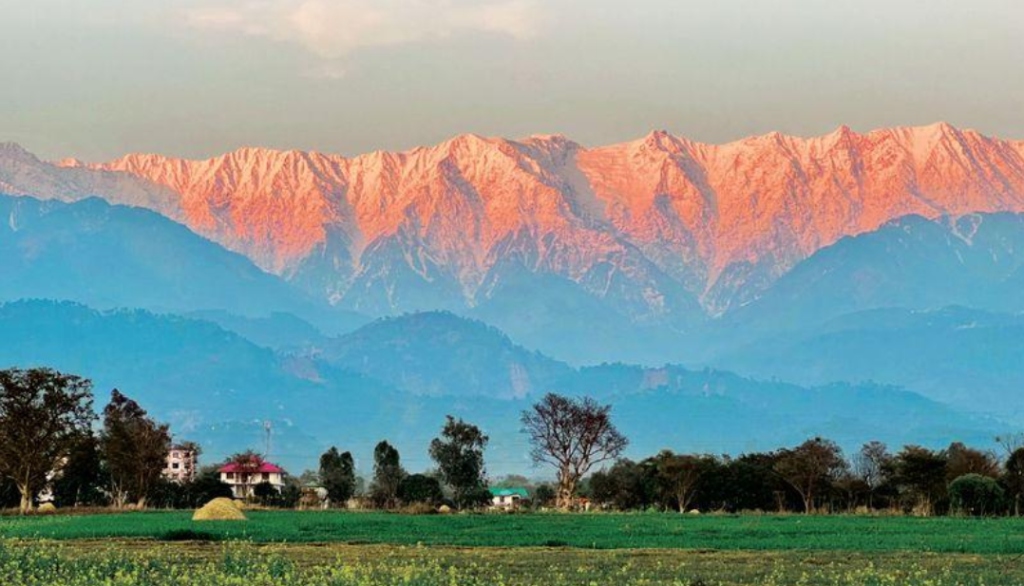
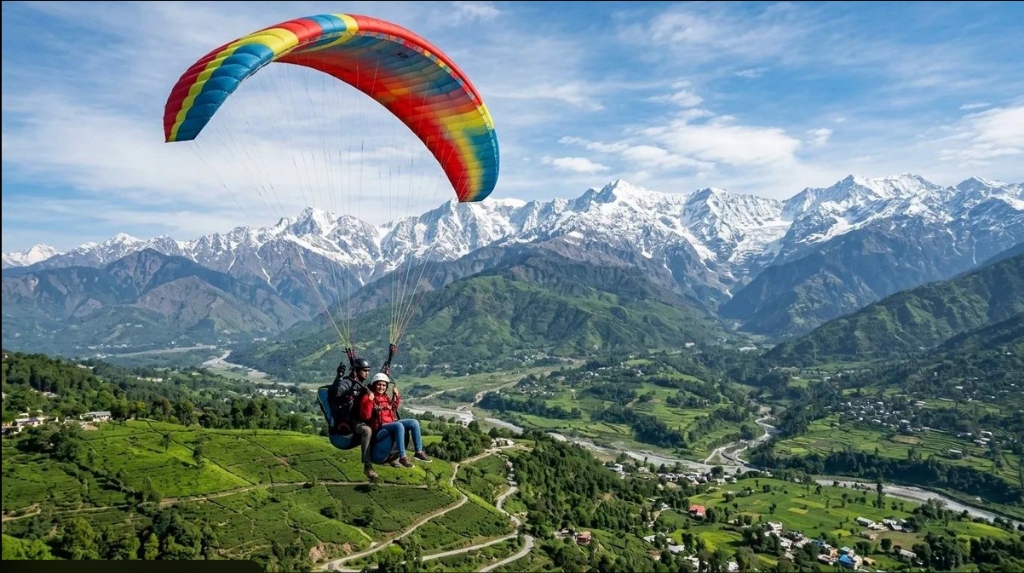
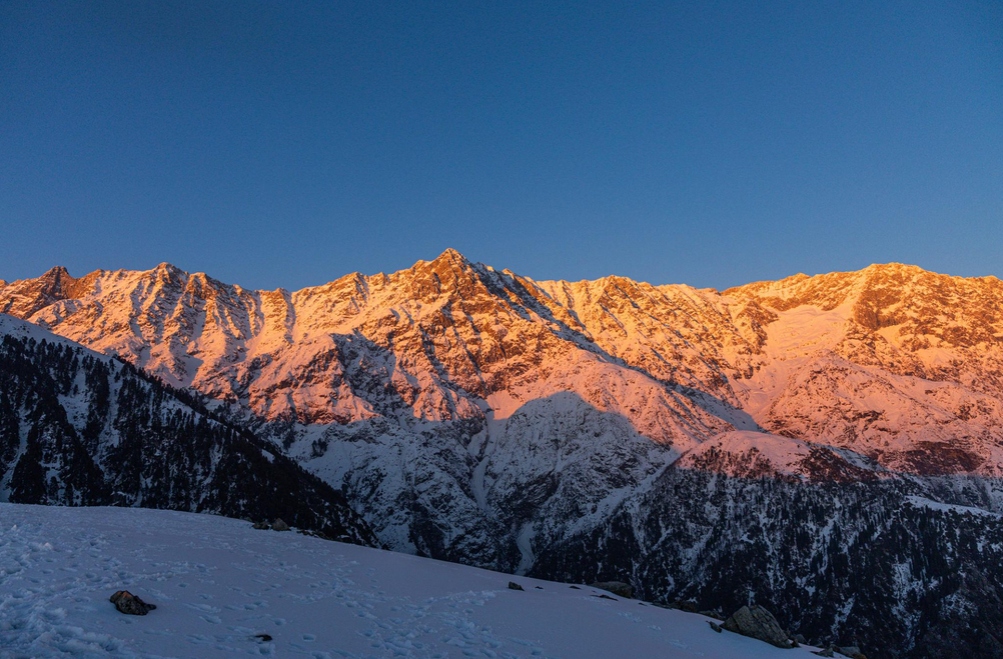
Nestled in the western Himalayas, Kangra district spans an area of over 5,739 square kilometers. Its geography is incredibly diverse, ranging from the fertile, sun-drenched plains of the Kangra Valley—watered by the perennial Beas River and its tributaries—to the snow-capped, jagged peaks of the Dhauladhar mountains that form a dramatic backdrop to the district. The district headquarters is located in Dharamshala, a town globally renowned for being the residence of His Holiness the 14th Dalai Lama and the headquarters of the Central Tibetan Administration (often called "Little Lhasa").
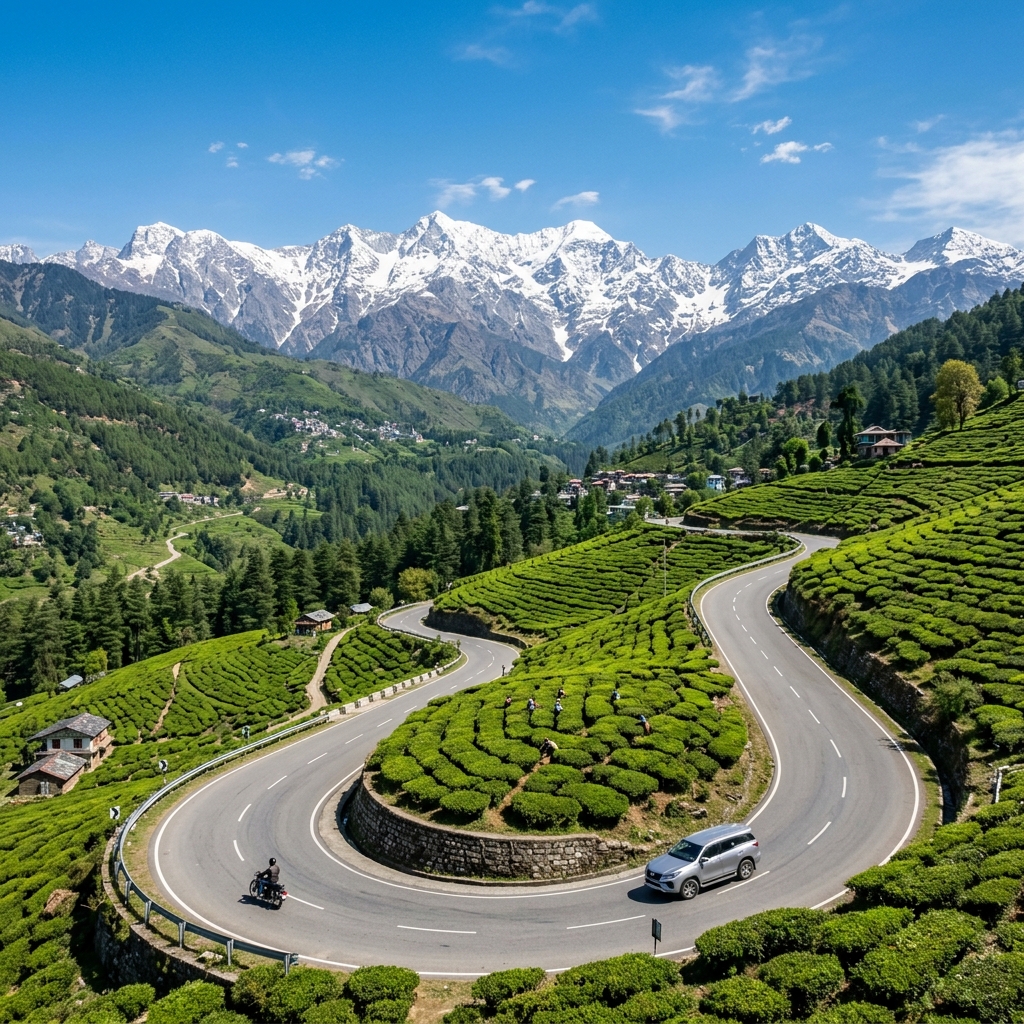
The Kangra Valley is considered one of the most picturesque valleys in the Himalayas. The topography varies from elevations of 500 meters in the plains to over 5,000 meters in the high mountains. This massive variation in altitude blesses Kangra with a unique microclimate. The lower plains experience hot summers and mild winters, while the upper reaches remain cloaked in snow for nearly half the year, making it an agricultural haven for crops ranging from wheat and maize to tea and exotic fruits.
Origin of the Name 'Kangra'
The etymology of "Kangra" is steeped in folklore, myth, and linguistic evolution. There are two primary theories regarding the origin of the name:
- The Mythological Origin (The Ear of Jalandhara): According to Hindu mythology, a powerful demon named Jalandhara acquired immense power through penance, becoming virtually invincible and terrorizing the gods. Lord Shiva eventually defeated Jalandhara, burying him under a massive mountain range. It is said that the demon’s ear (in Sanskrit/Hindi, Kaan) fell or was buried in this specific region. Over time, the place where the ear (Kaan) was buried and shaped (Gaddha) came to be known as "Kaangarh" or "Kangada", which eventually anglicized and localized into "Kangra."
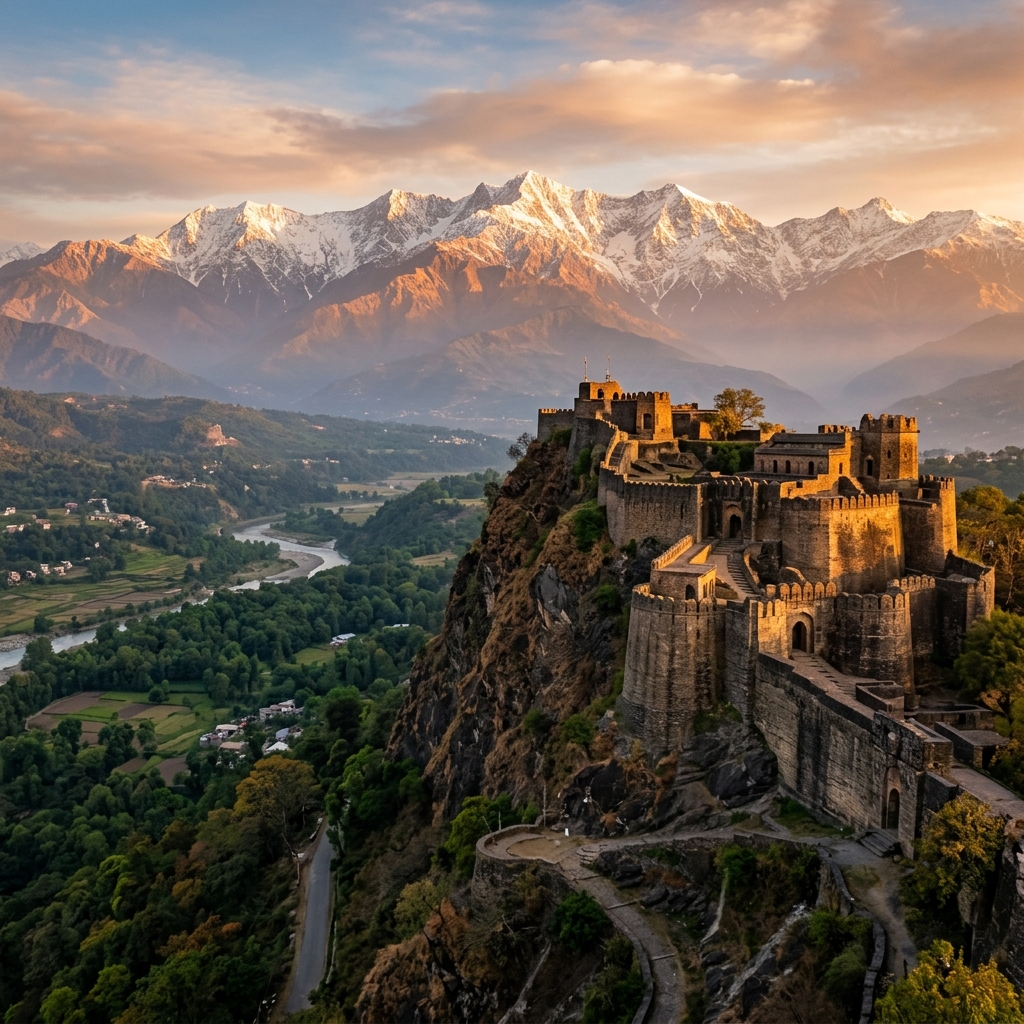
- The Linguistic/Geographical Origin: Another more historical and linguistic theory suggests that the name is derived from the word "Khangarh." In ancient local dialects, Khang means a steep hill or a fortress, and Garh means a fort. Given the imposing presence of the Kangra Fort, perched strategically on a steep cliff at the confluence of the Banganga and Majhi rivers, "Khangarh" (the fort on the steep hill) was a highly fitting name, which slowly morphed into Kangra over centuries of linguistic shifts.
Ancient History of Kangra & Mahabharata Links
The antiquity of Kangra is mind-boggling. It is one of the oldest recorded states in the world, tracing its lineage back to the days of the great Indian epic, the Mahabharata. In ancient times, the region was known as Trigarta. The word Trigarta translates to "the land of three rivers," referring to the territory drained by the three major Himalayan rivers: Ravi, Beas, and Sutlej.
According to the Mahabharata, the rulers of Trigarta were staunch allies of the Kauravas and fought fiercely against the Pandavas during the great war of Kurukshetra. King Susharma Chandra, the legendary founder of the Katoch dynasty, is said to have led the Trigarta army against Arjuna. After the devastating war, it is believed that Susharma Chandra retreated to the hills, built the impregnable Kangra Fort (historically known as Nagarkot or Bhimakot), and firmly established his kingdom in the valley.
Beyond the epics, archaeological evidence points to human habitation in the Kangra Valley dating back to the Paleolithic era. Stone tools discovered in the Banganga river valley suggest that early humans roamed these lands hundreds of thousands of years ago. Ancient texts like the Puranas, the Rajatarangini (the chronicle of the kings of Kashmir), and the writings of the Greek geographer Ptolemy (who referred to it as Kullindrine) all make references to this majestic kingdom.
Medieval History: Invasions in Kangra
The medieval history of Kangra is a saga of immense wealth, relentless invasions, and the sheer impregnability of the Kangra Fort. Because of the prosperity of the Kangra Valley and the fabled riches stored in the Brajeshwari Devi Temple inside the fort, Kangra became a prime target for foreign invaders.
Mahmud of Ghazni (1009 AD)
The most devastating early blow came in 1009 AD when the notorious conqueror Mahmud of Ghazni invaded India. Hearing tales of the unimaginable wealth housed in the Nagarkot temple—where generations of kings and merchants had donated gold, silver, and jewels—Ghazni laid siege to the Kangra Fort. He breached the defenses and looted a treasure so massive that historical chronicles struggle to describe its magnitude. Despite this catastrophic plundering, the resilient Katoch rulers eventually reclaimed their fort.
The Delhi Sultanate and The Mughals
In 1337, Muhammad bin Tughluq captured the fort, and later in 1365, Firuz Shah Tughluq laid siege to it. However, the most persistent attempts came from the great Mughal Empire. Emperor Akbar attempted to conquer Kangra but could not bring the fort under direct control, settling for a loose suzerainty where the Katoch kings paid tribute.
It was Akbar's son, Emperor Jahangir, who finally succeeded in 1620 AD after a brutal, 14-month-long siege that starved the defenders into submission. Jahangir was so captivated by the beauty of the Kangra Valley that he visited it in person, intending to build a summer residence, though he eventually favored Kashmir. For the next century and a half, Kangra remained under the control of Mughal governors (Nawabs).
The Resurgence of the Katoch Dynasty
As the Mughal Empire began to crumble in the late 18th century, the greatest ruler of the Katoch dynasty, Maharaja Sansar Chand II, rose to power. In 1789, he successfully reclaimed the ancestral Kangra Fort. Under his rule, Kangra experienced a golden age. Sansar Chand was a brilliant military strategist and a passionate patron of the arts. He fostered the famous "Kangra School of Miniature Painting," an art form characterized by its lyrical grace, vivid colors, and intricate depictions of Radha and Krishna, which brought global artistic acclaim to the valley.
However, his ambition proved to be his undoing. His expansionist campaigns alarmed neighboring hill states, who invited the fierce Gurkhas of Nepal to attack Kangra. In 1806, the Gurkhas defeated Sansar Chand, trapping him inside the Kangra Fort for years. Desperate, Sansar Chand sought the help of Maharaja Ranjit Singh, the mighty Sikh ruler of Punjab. Ranjit Singh drove the Gurkhas out in 1809 but took the Kangra Fort for himself, reducing Sansar Chand to a mere vassal.
Kangra District During the British Era
The British East India Company entered the picture after the First Anglo-Sikh War in 1846. Following the defeat of the Sikh Empire, the British annexed the entire Jullundur Doab, which included the Kangra hills. The Treaty of Lahore formally handed Kangra over to the British Crown.
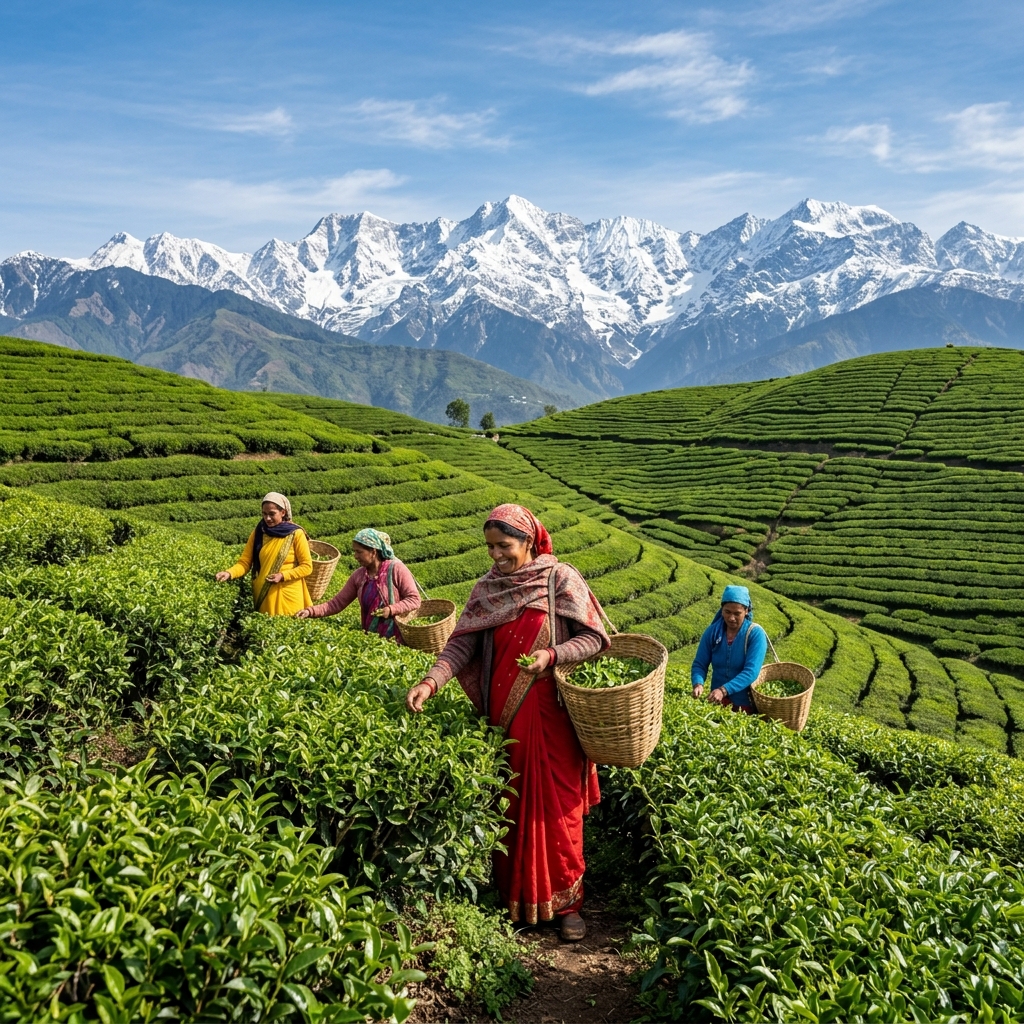
The British administration brought a radical shift in the governance and landscape of Kangra. Realizing the strategic and climatic value of the region, they established cantonments and hill stations. Dharamshala was founded in 1849 as a military cantonment and soon became the district headquarters. Palampur was developed as the center of the burgeoning tea industry, as the British found the valley's slopes and climate perfect for cultivating high-quality tea (which remains famous today as Kangra Tea).
The British era in Kangra was marked by infrastructure development, including the construction of the spectacular Kangra Valley Railway (a narrow-gauge railway linking Pathankot to Jogindernagar) built in the 1920s to transport heavy equipment for the Shanan Hydropower project.
However, this period was also marred by the devastating 1905 Kangra Earthquake. Measuring an estimated 7.8 on the Richter scale, the earthquake flattened towns, destroyed the historic Kangra Fort and the Brajeshwari Temple, and claimed over 20,000 lives. The British subsequently rebuilt the administrative centers, but the scars of the earthquake forever altered the district's architectural heritage.
Kangra History: Pre & Post Independence
The Struggle for Freedom
The people of Kangra were not passive subjects under British rule. The district seethed with nationalist fervor during the early 20th century. Local leaders organized secret societies, participated in the Non-Cooperation Movement, and boycotted foreign goods. The Praja Mandal movement gained massive traction here, protesting not only against the British but also against the oppressive policies of the princely states. Many brave men from Kangra joined Subhas Chandra Bose’s Indian National Army (INA), fighting for the motherland's liberation.
Post-Independence Restructuring
When India gained independence in 1947, Kangra was a district of the Punjab province. The region underwent significant administrative restructuring over the next few decades. Because of the distinct cultural, linguistic, and geographical identity of the hill people (Paharis), there was a strong movement for the integration of all hill areas into a single state.
On November 1, 1966, following the Punjab Reorganisation Act, Kangra, along with other hill districts like Kullu, Lahaul & Spiti, and Shimla, was transferred to the Union Territory of Himachal Pradesh. Finally, on January 25, 1971, Himachal Pradesh was granted full statehood. In 1972, Kangra district was further reorganized, and the districts of Hamirpur and Una were carved out of it for better administrative efficiency. Today, Kangra stands as the political heavyweight of Himachal Pradesh, electing 15 Members of the Legislative Assembly (MLAs), the highest of any district in the state.
The Katoch Dynasty: Rulers of Kangra
To speak of Kangra is to speak of the Katoch dynasty. It is widely acknowledged by historians as one of the oldest surviving royal lineages in the world.
- Susharma Chandra: The mythical founder who fought in the Mahabharata and built the Kangra Fort.
- Raja Parmanand Chandra (Porus): Some historical interpretations link the Katoch lineage to King Porus, who bravely fought Alexander the Great at the Battle of the Hydaspes in 326 BC.
- Maharaja Sansar Chand II (1765–1823): The greatest ruler of the lineage. He resurrected the glory of Trigarta, making it the most powerful state in the western Himalayas. His court was a sanctuary for artists, poets, and musicians.
- The Modern Descendants: After the British took over, the Katoch kings were reduced to titular Jagirdars (landlords). Today, the royal family still resides in Kangra, highly respected by the local populace. They manage trusts, preserve their ancestral temples, and work to promote the history and culture of the region.
Culture, Traditions & Festivals of Kangra
The culture of Kangra is a vibrant tapestry woven from indigenous traditions, royal patronage, and a deep-rooted spiritual connection to the mountains.
Art and Painting
The Kangra Style of Miniature Painting is the district's greatest cultural export. Emerging in the 18th century, these paintings are characterized by delicate brushwork, flowing lines, and a brilliant palette of natural colors extracted from minerals and vegetables. The themes are predominantly romantic and devotional, focusing on the divine love of Radha and Krishna, the Gita Govinda, and the legends of Shiva and Parvati. The women depicted in Kangra paintings are famously modeled after the local women of the valley, known for their sharp, delicate features.
Religion and Spirituality
Kangra is a land of shakti-peethas and ancient temples. The Brajeshwari Devi Temple in Kangra town, the Chamunda Devi Temple, the Jwala Ji Temple (where natural gas flames have burned continuously for centuries), and the Baijnath Temple (an ancient shrine dedicated to Lord Shiva) draw millions of pilgrims annually. Additionally, the arrival of the Dalai Lama in 1960 transformed upper Kangra (Dharamshala/McLeod Ganj) into a global center for Tibetan Buddhism. Monasteries, prayer flags, and monks in maroon robes form an integral part of the cultural landscape, creating a beautiful syncretism of Hindu and Buddhist traditions.
Festivals and Fairs
Festivals in Kangra are celebrated with immense fervor. The Navratras see huge congregations at the Devi temples. Lohri, Makar Sankranti, and Diwali are celebrated with traditional bonfires and feasts. The Sair festival, celebrated in mid-September, marks the harvest of the maize crop and the preparation for the harsh winter.
Local Lifestyle & Society in Kangra
The lifestyle of the Kangra people is deeply tied to their agrarian roots and the rhythm of the seasons.
- Language: The primary dialect spoken is Kangri, a distinct Indo-Aryan language that shares linguistic similarities with Dogri (spoken in neighboring Jammu) and Punjabi. Hindi is universally understood and spoken, while English is prevalent in urban and tourist areas.
- Attire: Traditional clothing is functional and modest. Men historically wore Kurta-Pyjama with a traditional Himachali cap (topi), though Western wear is now standard. Women wear the Salwar Kameez with a vibrant Dupatta (Dhatu) tied over the head, especially in rural areas. During festivals, traditional heavy silver jewelry is proudly displayed.
- Cuisine: Kangri food is simple, robust, and incredibly flavorful. The hallmark of local cuisine is the Kangri Dham—a traditional festive meal cooked entirely without onion and garlic by specialized Brahmin chefs called Botis. It features rice, Madra (chickpeas or kidney beans in a rich yogurt gravy), Khatta (a tangy tamarind-based curry), Mah ki Dal, and Meethe Chawal (sweet rice).
- Economy: While tourism (both domestic and international) and the tea industry are major economic drivers, the backbone of Kangra's society remains agriculture. Furthermore, the district has a massive tradition of military service. Almost every village in Kangra has sons serving in the Indian Armed Forces, giving the district a proud martial identity.
Kangra District Administration & Government
Today, Kangra operates under the standard democratic and administrative framework of the Republic of India and the State of Himachal Pradesh.
Administrative Structure
- Deputy Commissioner (DC): The district is headed by the Deputy Commissioner (also serving as the District Magistrate), an officer of the Indian Administrative Service (IAS). The DC is responsible for revenue collection, law and order, and the implementation of all developmental schemes.
- Sub-Divisions: Due to its vast size, Kangra is divided into numerous sub-divisions (such as Dharamshala, Palampur, Kangra, Nurpur, Dehra, Baijnath, etc.), each headed by a Sub-Divisional Magistrate (SDM).
- Panchayati Raj: At the grassroots level, governance is driven by the Panchayati Raj system. Villages elect their Pradhans (Village Heads) and Panchayat members, ensuring decentralized decision-making for local infrastructure, water supply, and rural development.
Political Significance
Politically, Kangra is the most critical district in Himachal Pradesh. It sends 15 MLAs to the 68-member Himachal Pradesh State Legislative Assembly (Vidhan Sabha). There is a popular political adage in the state: "The road to Shimla (the capital) goes through Kangra." Whichever political party manages to win the majority of seats in Kangra almost always forms the state government.
The district also forms the bulk of the Kangra Lok Sabha constituency, sending one Member of Parliament (MP) to the national government in New Delhi. The local government focuses heavily on expanding tourism infrastructure, promoting sustainable agriculture, supporting the tea industry, and managing the delicate ecological balance of the Himalayas in the face of rapid modernization.
Frequently Asked Questions (FAQs) about Kangra
What is Kangra famous for?
Kangra is famous for its ancient Kangra Fort, the historic Katoch dynasty, beautiful tea gardens, the Dalai Lama’s residence in Dharamshala, and ancient temples like Brajeshwari and Jwala Ji.
Which is the oldest fort in Himachal Pradesh?
The Kangra Fort is the oldest fort in Himachal Pradesh and one of the oldest recorded forts in India, with its origins tracing back to the ancient Trigarta kingdom mentioned in the Mahabharata.
What is the best time to visit Kangra?
The best time to visit Kangra is during the summer (March to June) for pleasant weather, or during early winter (September to November) for clear skies and stunning mountain views.